May 2026-05-20
A packaging supervisor at a mid-sized consumer goods plant once described their labeling bottleneck with a single number: 23 minutes of unplanned downtime per shift, traced almost entirely to label misapplication and jam clearance on a machine that had been purchased based on its top speed rating alone. The machine was fast, but it was fast at producing waste. The real question wasn‘t “how fast does it run”—it was “how consistently does it apply labels on our specific containers, at our actual line speed, across a full production day.”
That distinction sits at the heart of every successful equipment decision. This guide walks through a structured evaluation process, drawing on industry standards and verifiable specifications.
Before comparing equipment specifications, document exactly what you need the system to handle. Industry procurement guides emphasise that vague requests yield mismatched proposals. Instead, prepare a detailed technical brief including container dimensions, material type, label size, and adhesive requirements.
Key parameters to document include:
Container geometry and material: Round bottles, flat-sided cartons, tapered tubs, and irregularly shaped items each require different applicator configurations. Glass, HDPE, PET, and laminated pouches all present distinct surface challenges.
Label specifications: Dimensions, substrate material (paper, film, synthetic), and adhesive type—cold glue versus pressure-sensitive being the most fundamental distinction.
Application position: Single-side, wrap-around, top and bottom, front and back, or corner-wrap applications each demand specific head configurations.
Required throughput: Production speed, expressed in units per minute, determines the automation level needed. Industry guidance suggests that under 500 containers per day may suit a semi-automatic solution, while 500 to 2,000 containers per day typically warrant a simple automatic system.
Taking time on this documentation step prevents the most common purchasing error: buying a machine rated for round bottles when your product mix includes oval containers and tapered jars.
The distinction between semi-automatic and fully automatic systems is not merely about labour reduction—it‘s about process consistency, integration capability, and long-term total cost.
Semi-automatic systems require an operator to present each product to the labeling head. They tend to be smaller, less expensive, and suitable for lower volumes or frequent product changeovers. Fully automatic systems integrate with conveyors and handle container spacing, orientation, and label placement without manual intervention—consistently, at production speed, container after container.
The decision hinges on three practical questions:
Can your line physically accommodate a fully automatic system? Floor space, conveyor height, and upstream/downstream equipment interfaces all matter.
Does your volume justify the investment? The automatic labeling equipment market was valued at approximately $2.79 billion in 2025 and continues growing steadily. This growth reflects a broad industry shift toward automation, but the right choice depends on your specific throughput.
How much variability do you need to manage? Systems with servo-driven label dispensing and PLC-based recipe storage allow parameter changes—label size, application position, speed—to be recalled digitally rather than set manually, reducing changeover time and operator-dependent variability.
If your operation handles diverse container types or expects product line expansion, modular architectures that separate the labeling head from application-specific handling modules offer practical flexibility. Examining configurable automated labeling solutions for mixed production environments can help clarify which system architectures support your actual—and future—product mix.
A labeling system does not operate in isolation. It sits between upstream filling or forming equipment and downstream case packing or palletising stations. How well it integrates determines overall line effectiveness.
Environmental factors directly influence equipment specification:
Washdown requirements: Food, dairy, and pharmaceutical lines often require stainless steel construction rated for regular cleaning. IP65 or higher protection ratings indicate resistance to water ingress.
Cleanroom compatibility: Electronics and medical device labeling may require particle-controlled environments.
Temperature and humidity: Adhesive performance varies with ambient conditions; some label materials require climate-controlled application zones.
Dust and particulate exposure: Corrugated packaging lines generate dust that can foul sensors and adhesive paths if not properly managed.
Integration capability extends beyond physical fit. Modern production lines increasingly incorporate machine vision and IIoT connectivity to enable real-time code verification, adaptive marking, and remote diagnostics. Systems equipped with PLC-based centralised control and communication protocols such as OPC UA can share production metrics with plant-wide manufacturing execution systems. Key trends in the sector include advances in labeling automation technology, integration of IoT and smart factory solutions, and improved vision inspection for quality control.
If you anticipate expanding automation across your packaging line in the next three to five years, prioritise equipment with open communication architectures. Exploring industrial labeling systems with smart line integration capabilities can help you understand current connectivity options.
Labeling accuracy is the metric that directly impacts rejection rates and customer complaints. Industry-standard precision for automatic pressure-sensitive labelers is typically ±0.5 mm. Confirming whether the machine achieves this tolerance on your specific containers—not just on ideal test samples—is a critical due diligence step.
Build quality manifests in component selection. Key indicators include:
Motor and drive brands: Internationally recognised servo motors (such as Yaskawa, Siemens, or equivalent) provide precise speed and position control, contributing to labeling accuracy and energy efficiency.
Vacuum and pneumatic components: Quality vacuum pumps (such as German-made Becker units) deliver stable performance, low vibration, and long service life.
Frame and structural integrity: Stress-relieved welded steel frames with precision-machined mounting surfaces maintain alignment over years of multi-shift operation.
Sensor quality: Fibre-optic or photoelectric sensors for label gap detection and product positioning directly affect application accuracy.
Routine maintenance practices significantly influence equipment longevity. Regular checks and preventive measures enhance long-term performance and contribute to consistent labeling operations. Equipment designed with easily accessible wear components—rollers, drive belts, label peel plates—reduces maintenance downtime. When evaluating suppliers, ask about recommended spare parts inventory, typical wear component replacement intervals, and whether genuine replacement parts remain available for models manufactured a decade ago.
For operations where equipment reliability directly impacts delivery commitments, understanding how manufacturers approach build quality is essential. Examining durable labeling equipment engineered for demanding production environments can provide useful reference points.
Equipment purchasing decisions extend beyond technical specifications to the reliability of the supplier behind the machine. A structured supplier assessment should include technical validation, operational reliability, and post-sale support readiness.
Verifiable credentials provide a useful baseline:
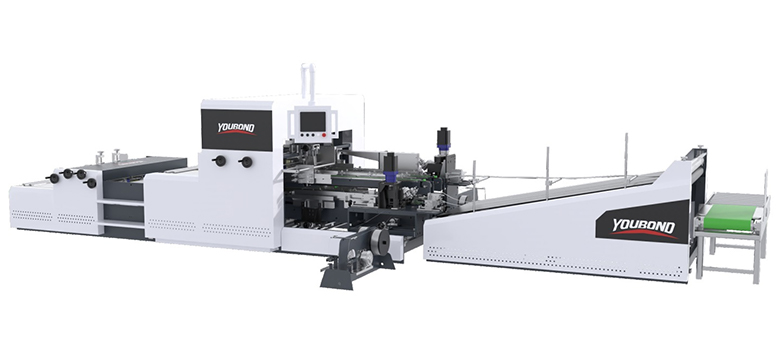
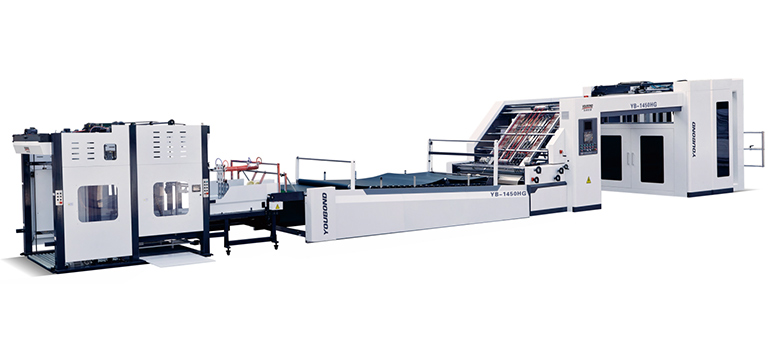
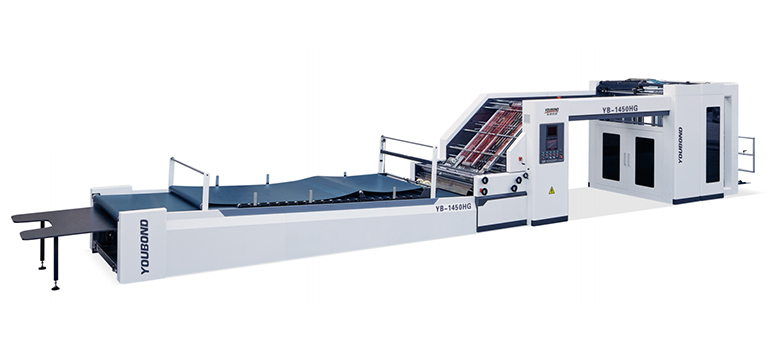
Industry tenure and specialisation: YONGBANG (Wenzhou Yongbang Machinery Co., Ltd.) has been established in the packaging machinery sector, manufacturing and supplying equipment for diverse industries. Their product portfolio includes systems suitable for packaging large home appliances, household products, and outdoor items—accommodating corrugated paper of various sizes with accurate positioning of printed sheets.
Component sourcing transparency: Equipment incorporating internationally recognised components—such as German Siemens frequency converters and Japanese Yaskawa servo motors—provides verifiable quality indicators.
Customisation capability: Each application presents unique requirements. Suppliers that maintain experienced R&D engineering teams and in-house machining centres can adapt designs to specific production needs without relying entirely on third-party engineering.
After-sales infrastructure: Confirm whether the supplier offers remote diagnostic support, readily available spare parts, and documented maintenance procedures. Engineering agility—the ability to customize labeling speed, adjust container diameter ranges, or integrate additional dispenser heads—separates committed manufacturing partners from transactional vendors.
For those evaluating equipment partners over a long investment horizon, discovering how YONGBANG approaches labeling system design and customer support offers additional context on build philosophy and service commitment.
Equipment selection is rarely about finding a single “best” machine. It‘s about finding the right match between your product profile, production environment, volume requirements, and budget.
Before committing to any purchase:
Run your actual products on the machine under consideration. Prepare samples of your most demanding containers and label combinations, and measure application accuracy across a statistically meaningful batch.
Time the changeover between your highest-volume SKUs. This number often matters more than top speed.
Inspect the build—open panels, examine weld quality, and note the brands on motors and sensors.
Talk to reference customers who run similar products at similar volumes. Ask about downtime frequency, spare parts availability, and technical support responsiveness.
Document your requirements in a detailed specification sheet before engaging suppliers. The more precisely you define your needs, the more accurately vendors can propose suitable solutions.
Selecting the right automated labeling system rewards thorough preparation. The global labeling machines market was valued at approximately $4.83 billion in 2025, reflecting sustained demand across food and beverage, pharmaceutical, consumer goods, and industrial sectors. Within this landscape, equipment that balances accuracy, durability, and integration capability delivers returns measured not just in labels per minute, but in years of reliable operation.
Disclaimer: The market data, performance specifications, and supplier information referenced in this article are drawn from publicly available industry reports, product documentation, and third-party procurement guides. Actual equipment performance depends on specific configuration, product characteristics, operating conditions, and maintenance practices. Readers should verify all claims directly with equipment suppliers and conduct their own due diligence before making purchasing decisions. References to specific component brands are based on manufacturer-disclosed specifications and do not constitute endorsement.
GET A QUOTE
 English
 China
China