Jul 2026-07-21
A packaging converter setting up a new production line for corrugated display boxes faces a fundamental equipment decision: should they invest in a flute laminator or a flat laminator? The names sound similar, and both machines bond layers of material together, but they serve distinctly different purposes in a packaging operation. Confusing the two can lead to purchasing a machine that cannot handle the required substrates, produces unacceptable quality on the intended products, or operates far below the needed throughput. This guide clarifies what each machine type does, what materials it processes, and how to determine which one matches a given production requirement.
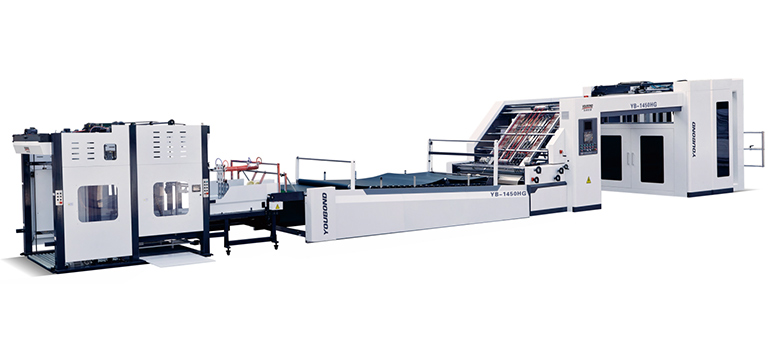
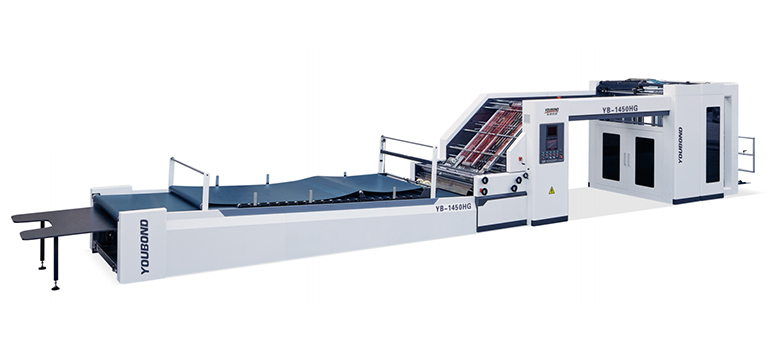
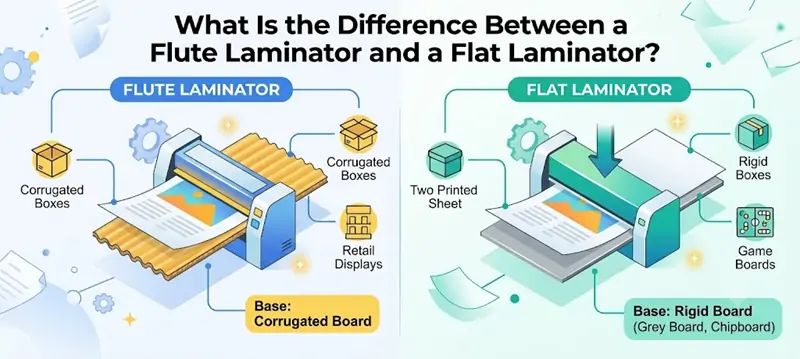
A flute laminator is designed to bond a printed top sheet—typically paper or lightweight cardstock in the range of 120 to 500 gsm—onto a corrugated base sheet. The base sheet can be single-wall, double-wall, or triple-wall corrugated board, depending on the machine's specifications and the required strength of the finished product.
The process begins with the top sheet being fed from a stack, coated with adhesive on its underside, and then precisely aligned with the corrugated bottom sheet. Alignment is critical: the printed graphics on the top sheet must register correctly with the edges of the corrugated board so that downstream die-cutting or slotting operations produce correctly positioned printed panels. Modern flute laminators use servo-driven positioning systems with photoelectric sensors to achieve registration accuracy of ±1mm or better.
The laminated sheet exits the machine as a single flat piece, ready for die-cutting into boxes, display stands, or other packaging structures. Because the machine bonds a flat printed sheet to a fluted substrate, the finished product combines high-quality print appearance on the outside with the structural strength of corrugated board. A flute laminating machine is the standard choice for producing retail-ready packaging, point-of-sale displays, and corrugated boxes that require full-color graphics on the exterior surface.
A flat laminator bonds two flat sheets together—neither sheet has a corrugated or fluted structure. The most common application is mounting printed paper or lightweight cardstock onto a rigid substrate such as grey board, chipboard, or thick cardboard. The resulting laminated sheet is used for hard book covers, rigid boxes, game boards, jigsaw puzzles, and similar products that require a stiff, flat panel with a high-quality printed surface.
The process is similar to flute lamination in that adhesive is applied to one sheet, and the two plies are brought together under pressure. However, the materials and the end product differ fundamentally. A flat laminator processes dense, non-corrugated board—often 600 gsm and above for the base layer—rather than corrugated sheet. The machine must apply sufficient pressure to bond two dense materials without trapping air bubbles, which would create visible defects on the finished panel.
Flat laminators operate at lower speeds than flute laminators because the heavier substrates require longer dwell time under pressure to achieve a secure bond. They are built with heavier roller systems and stronger frames to handle the higher nip pressures required for dense board materials.
| Feature | Flute Laminator | Flat Laminator |
|---|---|---|
| Bottom substrate | Corrugated board (single/double/triple wall) | Rigid board (grey board, chipboard, thick cardboard) |
| Top substrate | Printed paper or cardstock (120–500 gsm) | Printed paper or cardstock |
| Finished product | Corrugated boxes, displays, retail packaging | Book covers, rigid boxes, game boards, puzzle boards |
| Operating speed | Up to 150 m/min on high-speed models | Lower speeds, determined by substrate thickness |
| Alignment requirement | ±1mm for print-to-cut registration | Varies by application |
| Machine frame | Light to medium construction | Heavy construction for high nip pressure |
The decision between a flute laminator and a flat laminator comes down to three questions:
What is the bottom substrate? If the base layer is corrugated board—regardless of flute type or wall count—a flute laminator is required. If the base layer is solid rigid board with no flute structure, a flat laminator is the correct choice.
What is the end product? Corrugated boxes, shipping containers, retail displays, and similar packaging structures are produced on flute laminators. Hard book covers, rigid setup boxes, game boards, and thick display panels are produced on flat laminators.
Can one machine do both? Generally, no. A flute laminator is not designed to handle the high nip pressures and dense materials that a flat laminator processes. Conversely, a flat laminator's feed system is not configured for the thickness and structure of corrugated board. Attempting to run corrugated board through a flat laminator risks crushing the flutes, destroying the board's structural integrity and producing a defective product. Some manufacturers offer corrugated laminating equipment specifically engineered for the demands of flute-to-paper bonding, while flat laminators remain purpose-built for rigid board applications.
What about combination machines? Some equipment is designed to handle both corrugated-to-paper and board-to-paper lamination. These machines include adjustable pressure systems, interchangeable feed components, and wider material specification ranges. For a shop producing both corrugated packaging and rigid board products, a combination-capable machine may provide the operational flexibility to serve both markets without purchasing two separate machines.
The core distinction between a flute laminator and a flat laminator is not about which machine is "better"—it is about which machine matches the substrate and the end product. Corrugated packaging requires a machine designed to bond printed sheets to fluted board without crushing the flute structure. Rigid board products require a machine built to apply the higher pressures needed for dense, non-corrugated materials.
Identifying the base substrate and the finished product before evaluating equipment prevents the costly mistake of selecting a machine that cannot process the materials the shop runs daily. For operations producing corrugated packaging, evaluating automated flute-to-paper bonding systems provides a starting point for comparing machine configurations against specific throughput and quality requirements.
GET A QUOTE
 English
 China
China